By the team at Anyang Lonram Match Co., Ltd — match sourcing and QC since 2015.
Most matchbox complaints trace back to one of two numbers: stick length or board weight. This page collects the specifications we quote every day, so you can brief a designer or compare quotes without guessing.
Quick-Pick Size Table
| Product | Stick length | Box size (typical) | Sticks per box |
|---|---|---|---|
| Restaurant table matches | 40–50 mm | 50 × 36 × 14 mm matchbook or mini box | 20 |
| Hotel vanity matches | 55–60 mm | 56 × 40 × 16 mm slide box | 20–30 |
| Candle matches | 55–75 mm | 65–90 mm slide box | 30–40 |
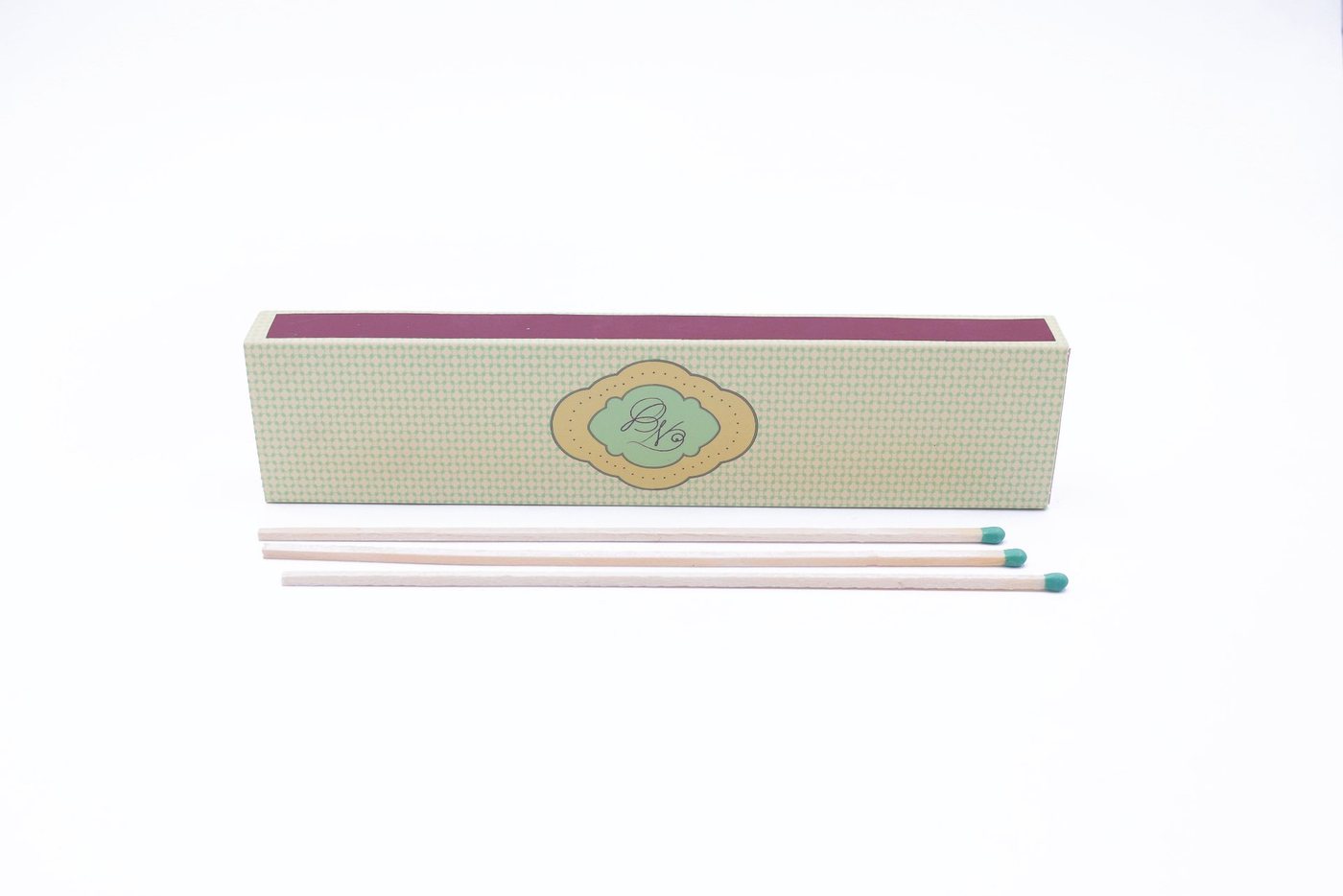
| Cigar matches | 75–100 mm | 110–130 mm long slide box | 15–25 |
| Fireplace matches | 100–150 mm | Slide box, jar or tube | 30–60 |
Rule: the box interior should be about 4–5 mm taller than the stick so heads aren't crushed, and the strike strip sits on the side the lid opens from — so the match is drawn away from the hand, never across it.
Box Styles, Briefly
- Slide (drawer) box — inner tray + printed sleeve. 2–3 mm greyboard wrapped in printed paper. Feels solid; five printable surfaces.
- Hinged lid box — rigid box, flip lid, magnetic or friction closure. The luxury format.
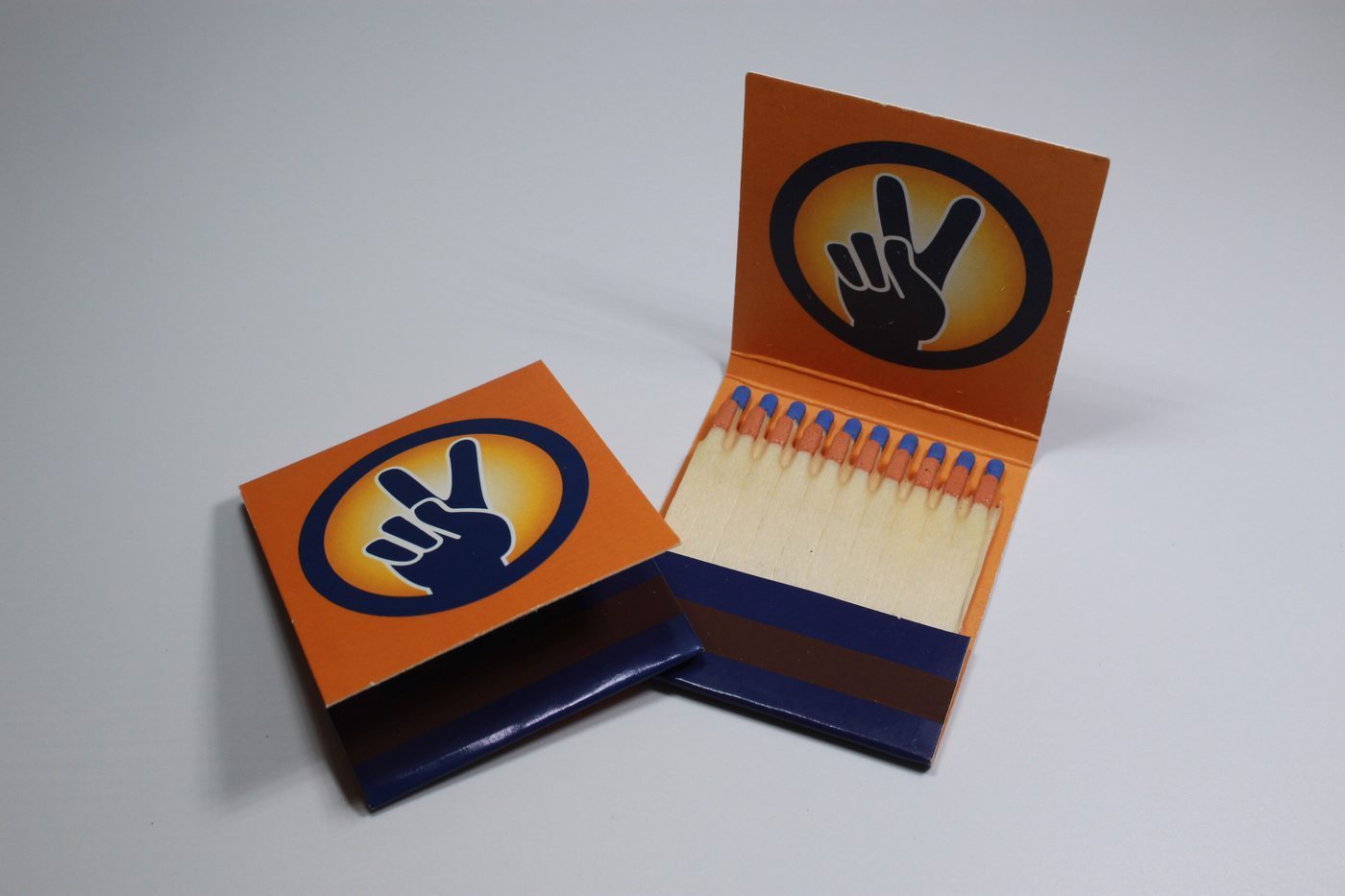
- Matchbook — stapled card cover, 20 flat matches. Cheapest and most compact; the restaurant standard.
- Jar / tube / bottle — matches stand head-up in glass, kraft tube or woven vessel with strike strip on the side or base.
Board: Weights and What They Feel Like
- 300–350 gsm paperboard — matchbooks and budget boxes. Fine at volume; flexes under pressure.
- 1.5–2 mm greyboard with wrapped paper — the standard for slide and hinged boxes. Feels "real" in the hand.
- 2.5–3 mm greyboard — premium gift boxes; adds cost and shipping weight but reads as quality on a retail shelf.
If a quote looks suspiciously cheap, check the board spec first. A 1 mm difference in greyboard is invisible in a photo and obvious in the hand.
Finishes That Matter
Matte lamination is the workhorse — fingerprint-resistant, takes foil well. Soft-touch lamination feels velvety but scuffs light colours. Uncoated kraft reads natural and suits eco lines. Foil, emboss and spot-UV layer on top of any of these.
The Strike Strip
The red or blue side strip is a mix of red phosphorus and glass powder — the only place the box will ignite from. Quality marks to check on a sample: it ignites on the first or second draw, doesn't flake, and the match head doesn't crumble. Heads themselves are formulated to be safety matches — they will not light on anything but a prepared strip.
Frequently Asked
What is the most common matchbox size?
For retail and hospitality, a 56 × 40 × 16 mm slide box with 55 mm sticks is the closest thing to a global default — it fits a hotel vanity, a candle shelf and a pocket.
Are matchbox sizes standardised?
No. Dimensions follow stick length and fill count, and every factory has its own tooling. Treat any "standard size" as a starting point for customisation.
Can I get a size that's not in your table?
Yes — box tooling is custom-made per order. If you can sketch it, it can usually be made at MOQ. Send us the idea.
Which size ships cheapest?
Matchbooks. They're flat, light and pack thousands per carton — the freight per unit can be a tenth of a rigid gift box.